Seeking
Works by
Igor
Mitoraj
A collector is looking for works by Mitoraj
in any condition, any size — bought directly
from you, simply and without fuss.
A collector is looking for works by Mitoraj
in any condition, any size — bought directly
from you, simply and without fuss.
Auction houses charge sellers 10–18% commission on the hammer price — plus 4–12 weeks to process the consignment, then another month before payment. The process takes months and a commission is deducted from whatever price is achieved. Selling directly means an offer the same day and payment within days, with no commission deducted.
I pay based on current auction market levels. I am not looking for bargains — I am looking for works to add to a serious collection and I pay accordingly. Every enquiry is treated with complete discretion: your identity and the details of any work you share are never disclosed to any third party, under any circumstances.
I consider all works: bronzes, marbles, lithographs, drawings, and unique objects. All conditions are considered, all formats from the smallest Artcurial multiple to monumental commissions. If you are unsure whether what you own is genuine, I will give you an honest assessment at no charge and with no obligation to sell.
I am a collector based in Warsaw who loves Mitoraj's work and is looking to add to a personal collection. I buy directly from people — whether you inherited a piece, bought it years ago, or simply feel it's time for it to move on.
No piece is too modest or too small — I am just as interested in a small lithograph as a larger bronze. Feel free to get in touch with no pressure at all.
All editions and sizes. Asclépios, Perseus, Tindaro, Eros — all considered.
Original carved works. Pietrasanta pieces especially welcome.
Drawings, sketches, lithographs, prints and signed multiples.
Lamps, ceramics, and other singular works.
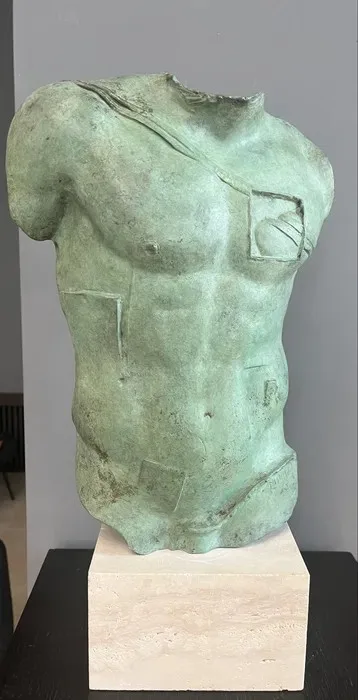
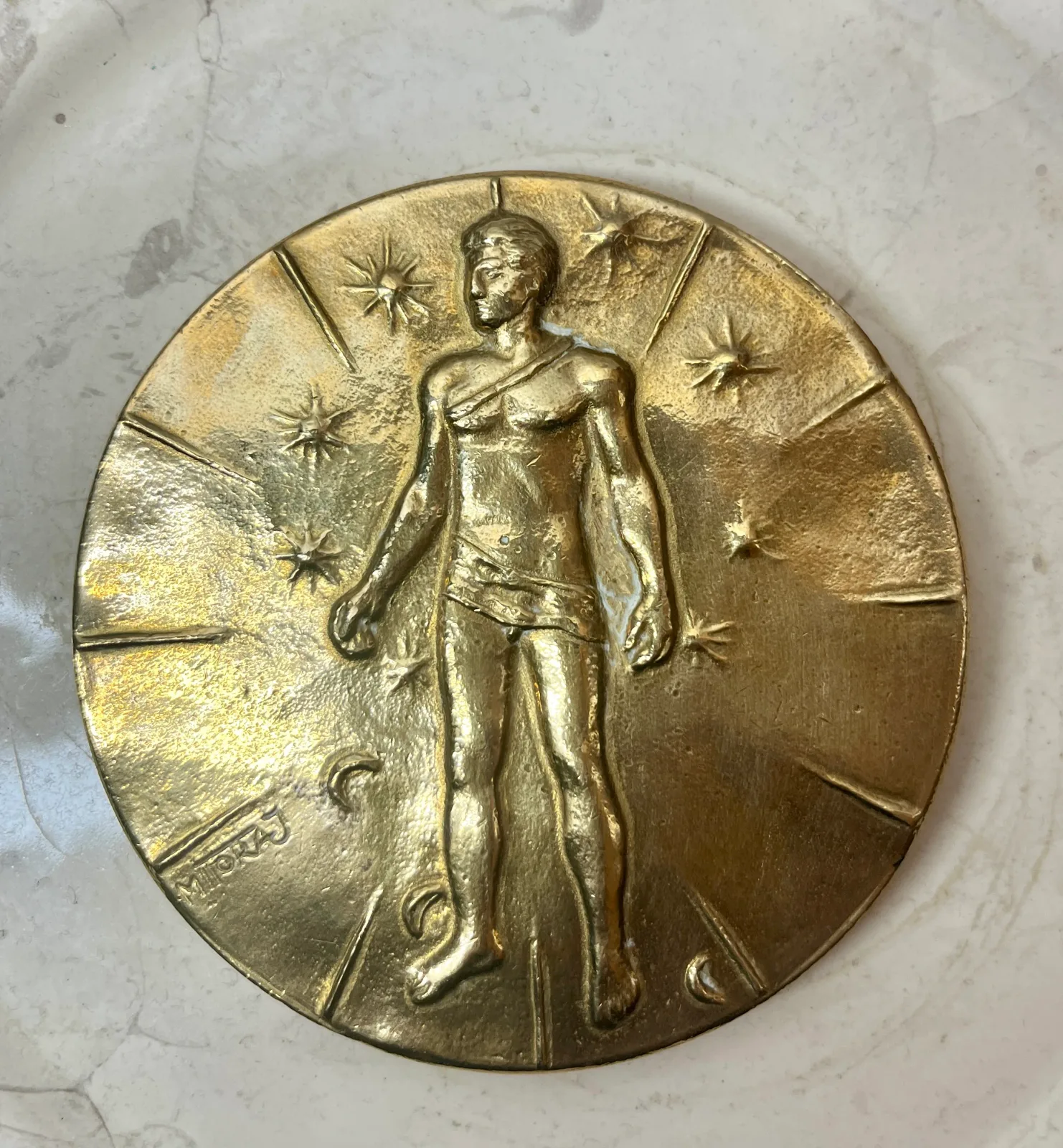
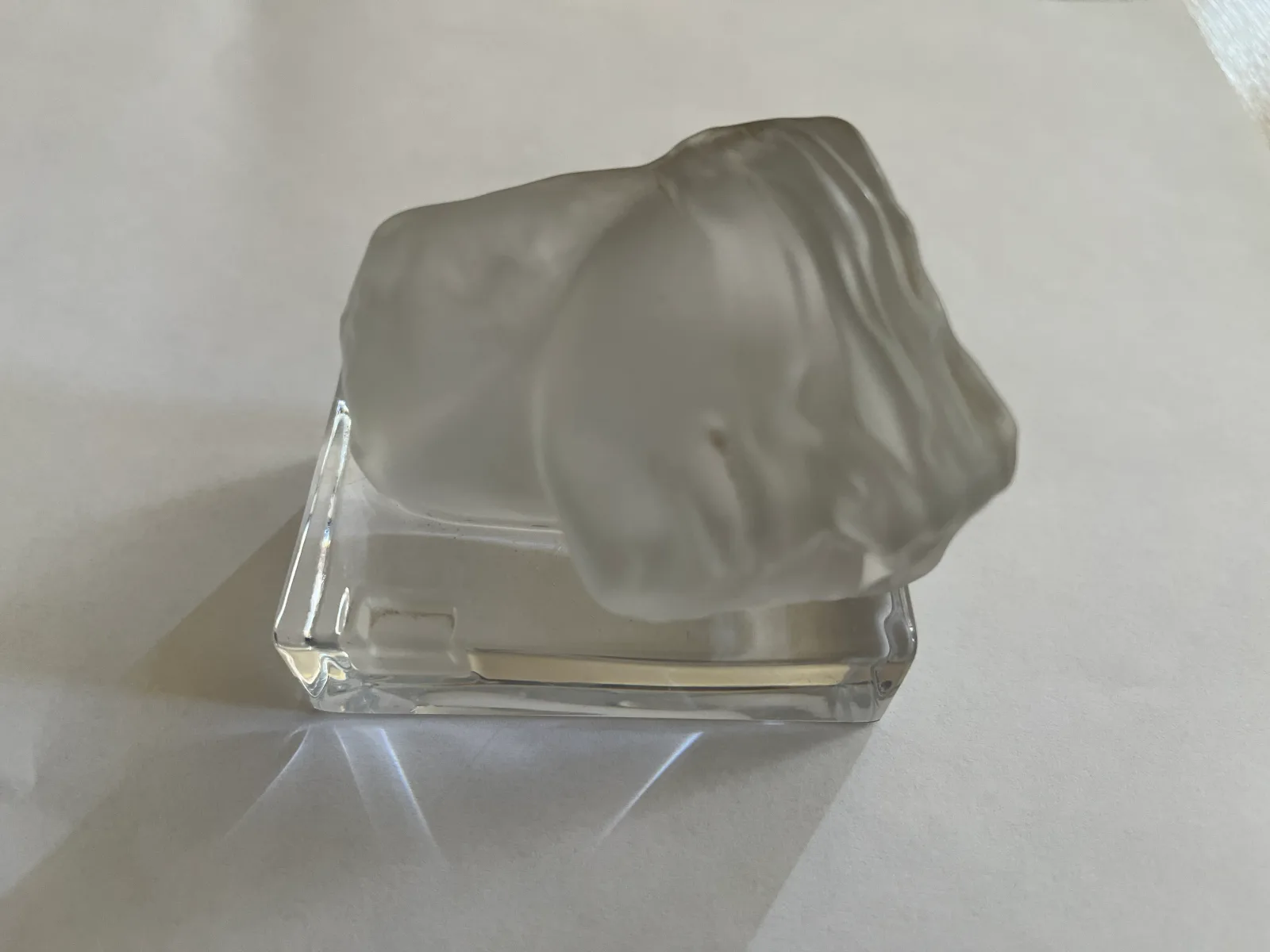
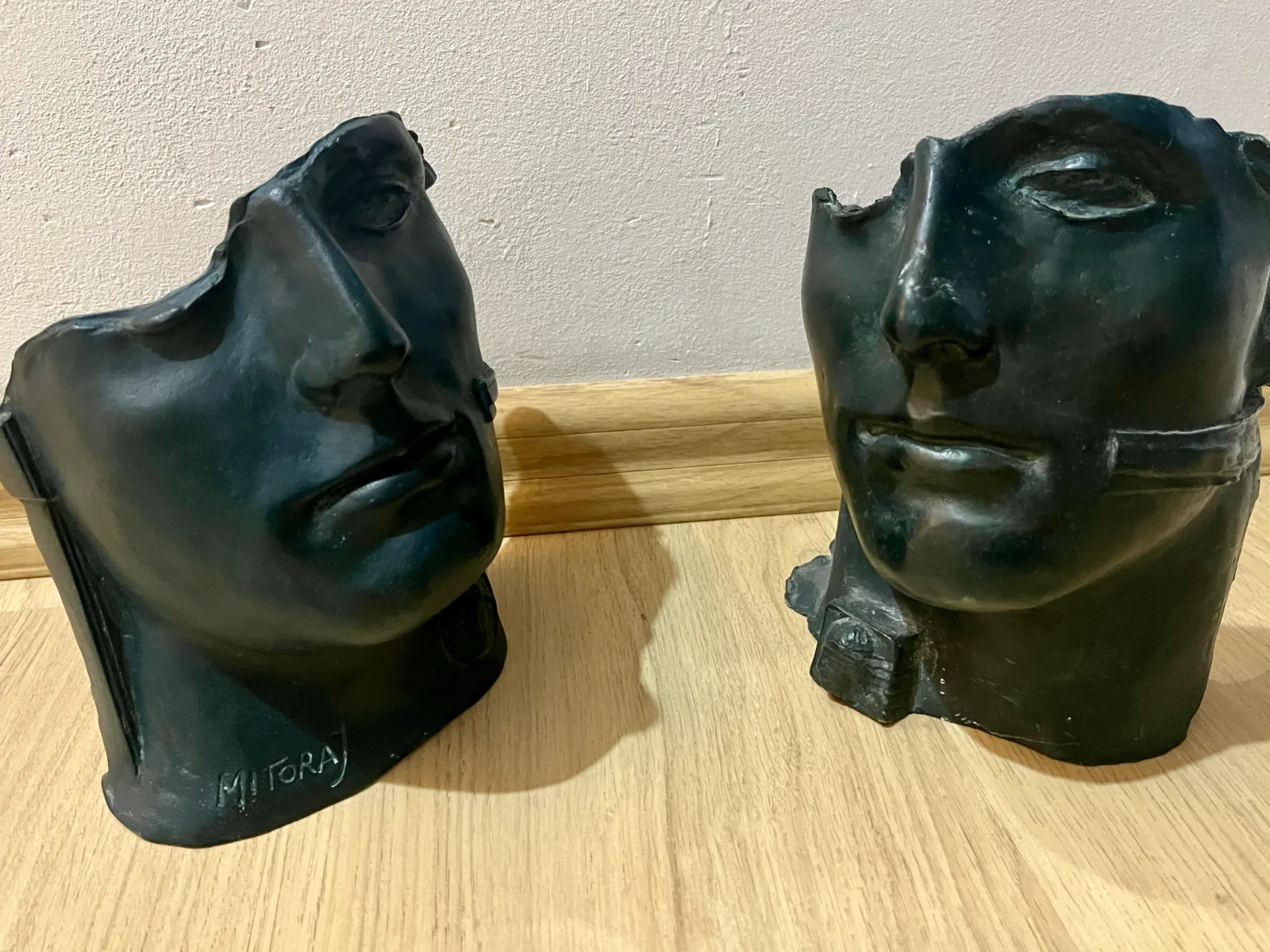
Examples of works I seek and have acquired — bronzes, medals, crystal pieces, heads and torsos in the characteristic Mitoraj style.
Gold-tone cast bronze medal with a standing figure amid stars and crescent moons — signed Mitoraj on the reverse. ~12 cm diameter
A rare pâte de verre crystal sculpture commissioned by the legendary French glassmaker Daum (founded 1877). Depicting a fragmented head in Mitoraj's signature style, this numbered piece bridges his classical themes with the luxury craft tradition of Nancy. 7.5 × 8 × 4.5 cm
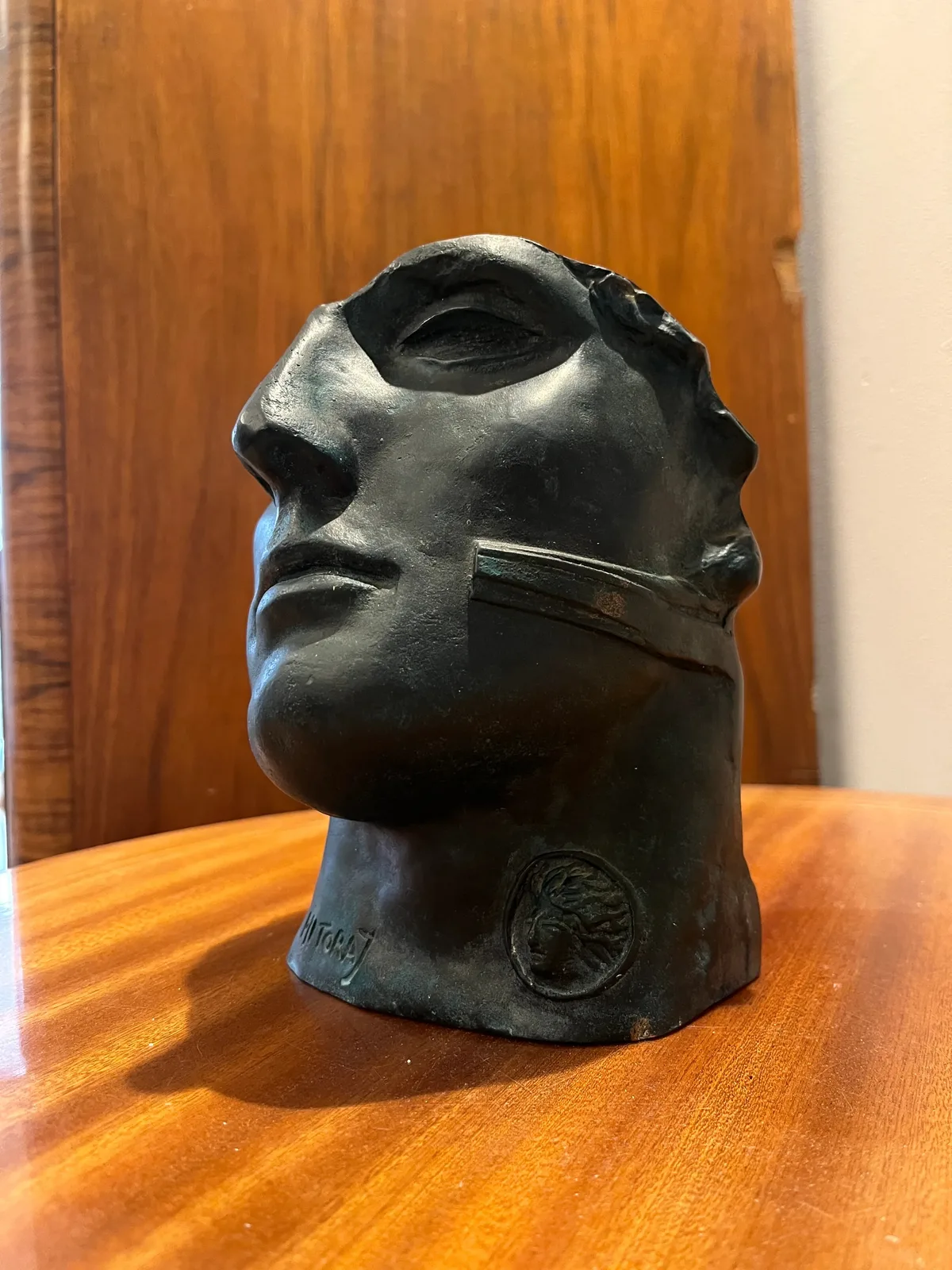
Two dark-patinated bronze head fragments — Centurione I (1987, ed. 250) and Centurione II (1986, ed. 1500) — from Mitoraj's celebrated Centurion series. Each piece depicts a partial face evoking the damaged grandeur of ancient Roman statuary, signed and from limited editions of 1500. I: ed. 250 · II: ed. 1500 · each approx. 19 cm height
A single dark bronze head from the Centurione II series (1986), green-patinated and signed Mitoraj at the neck, numbered from an edition of 1500. The horizontal band across the face — a recurring Mitoraj motif — alludes to blindness, mystery, and the passage of time. 18.5 × 14 × 6 cm
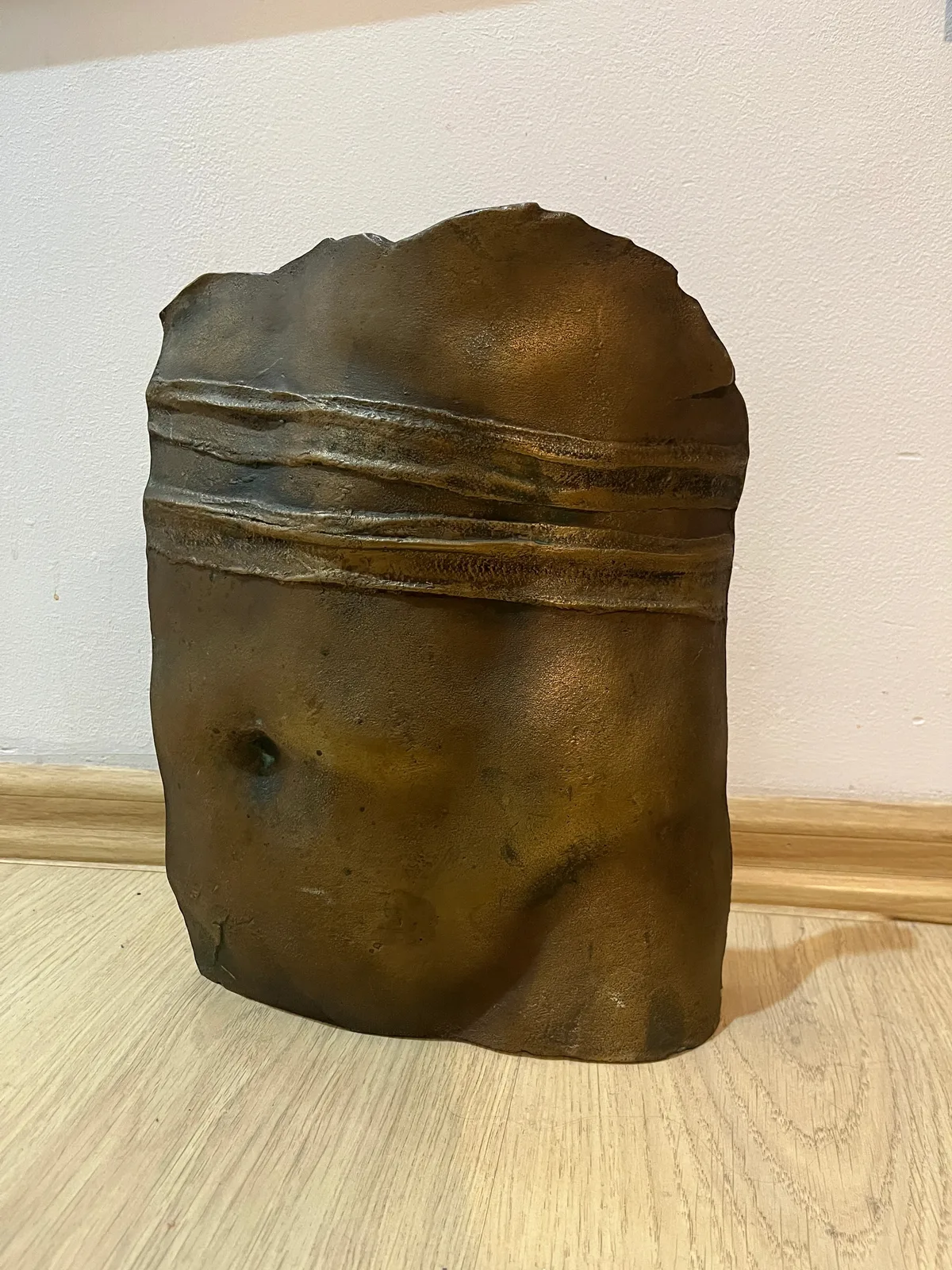
A wrapped male torso in dark golden-brown bronze — horizontal binding straps cross the chest, simultaneously concealing and defining the body beneath. Signed MITORAJ. A characteristic motif bridging the classical tradition of the bound captive with the fragmented modern body. approx. 28–30 cm height. approx. 28 × 20 cm
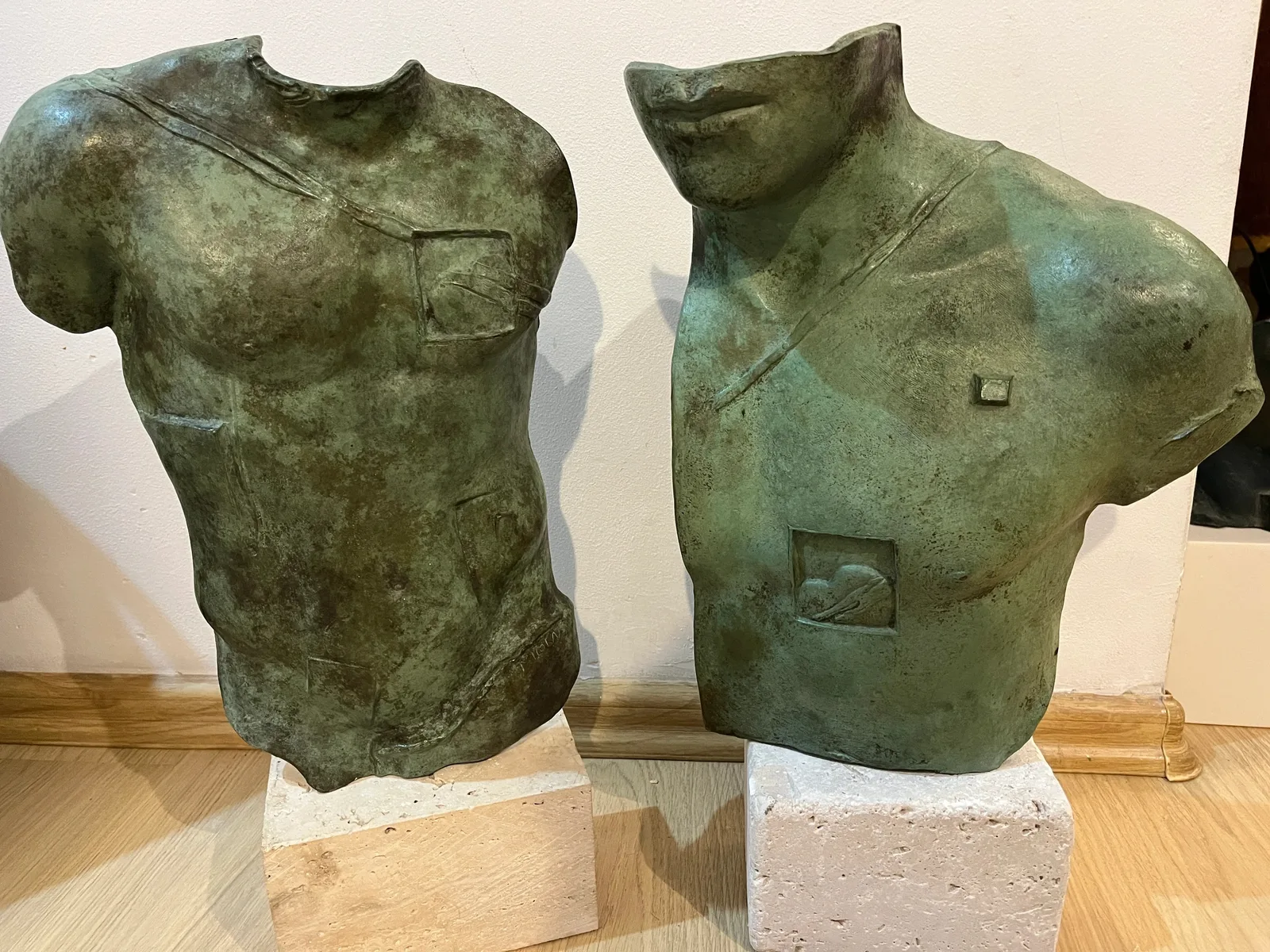
Two iconic bronze torsos from 1988 — Persée (Perseus) and Asclépios — each on a travertine base, signed and from numbered editions of 1000. The square apertures piercing chest and collarbone are Mitoraj's hallmark: windows into the mythological soul, merging classical beauty with postmodern fragmentation. 38 cm (without base) · 48 cm total
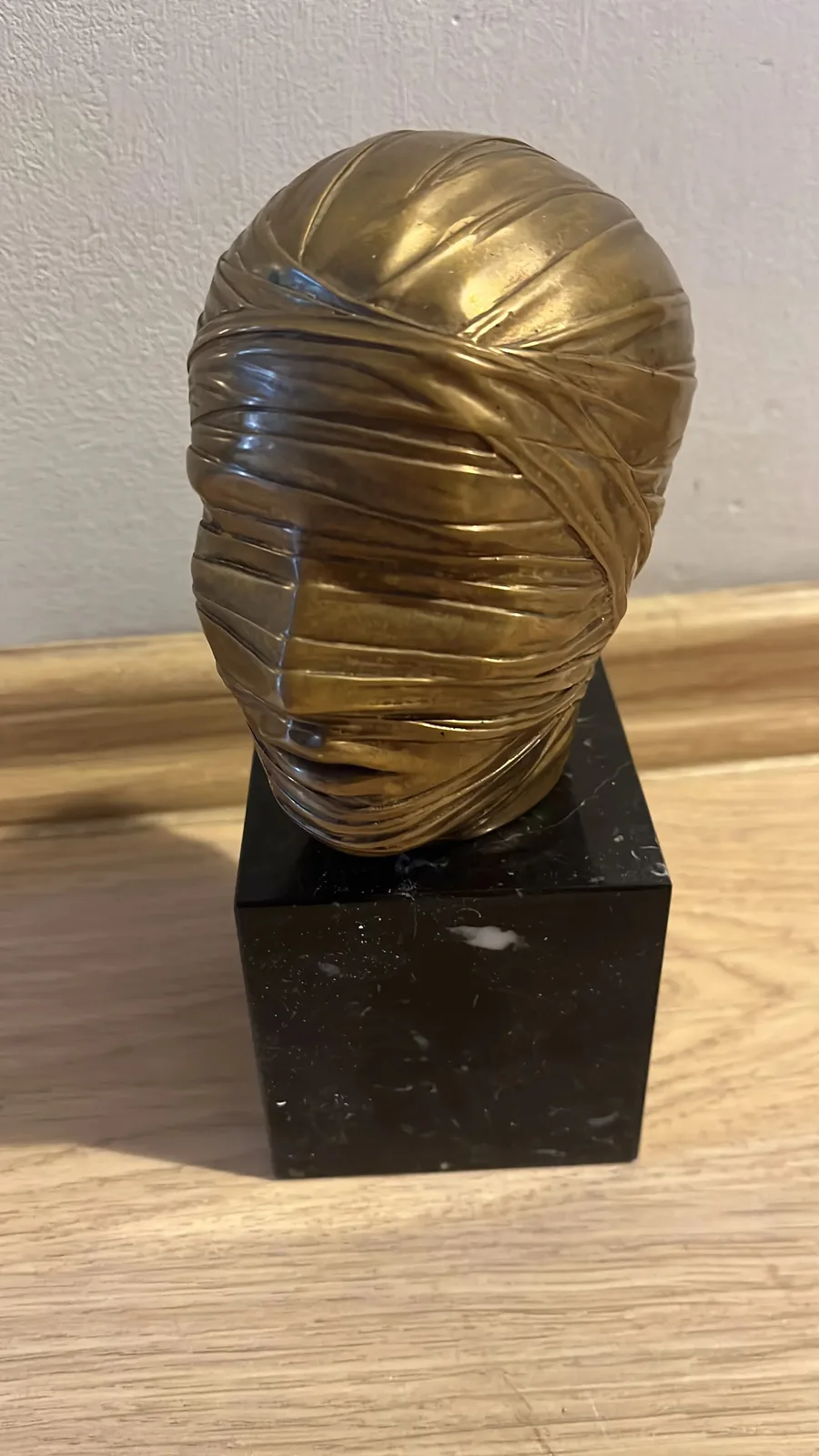
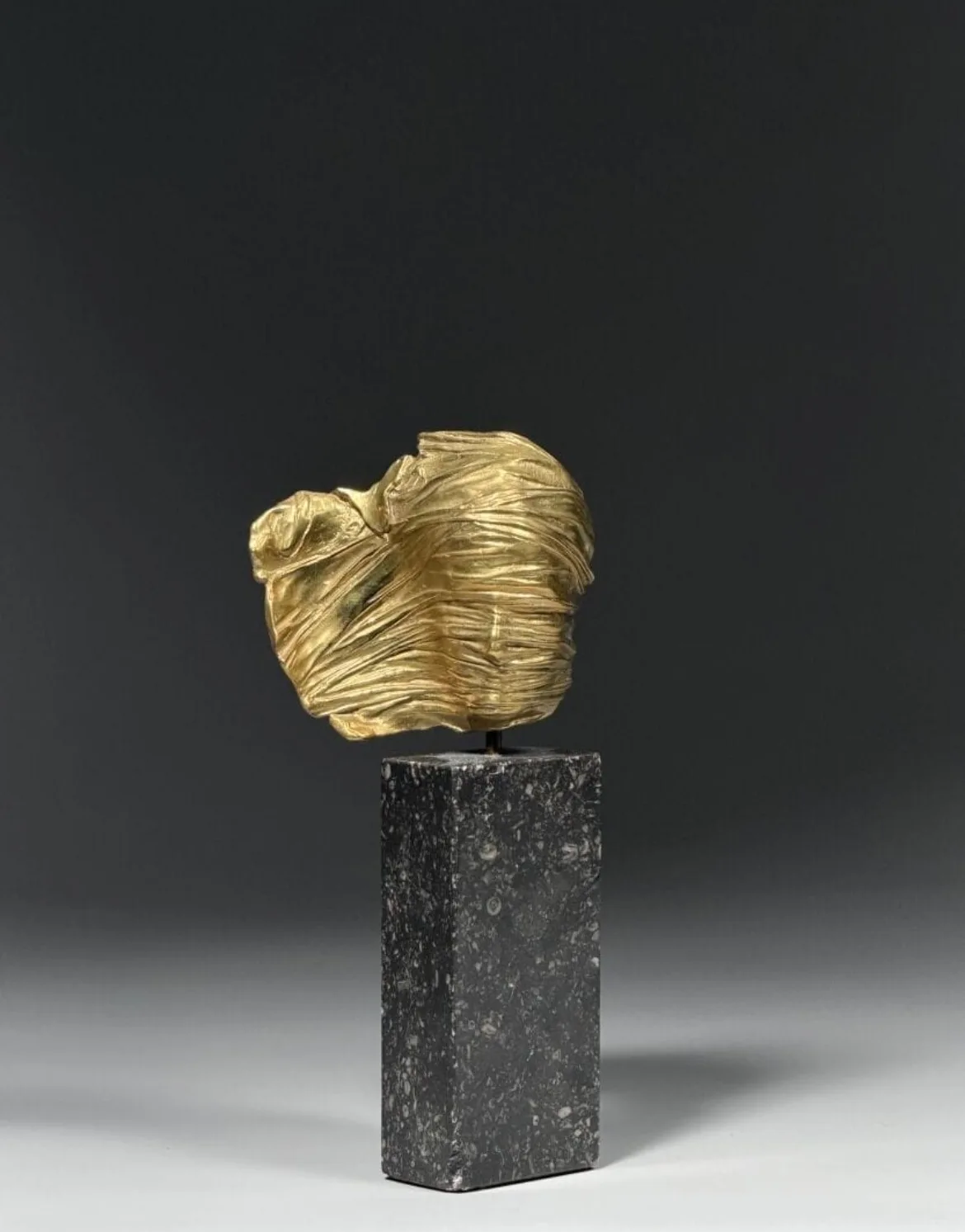
One of Mitoraj's most intimate early works (1978). A polished golden-patina bronze head entirely enveloped in bandages — the ultimate expression of concealment and interiority. Signed and numbered from an edition of 250, published by Artcurial, Paris. On its original black marble base. 12 cm (without base) · 20 cm total
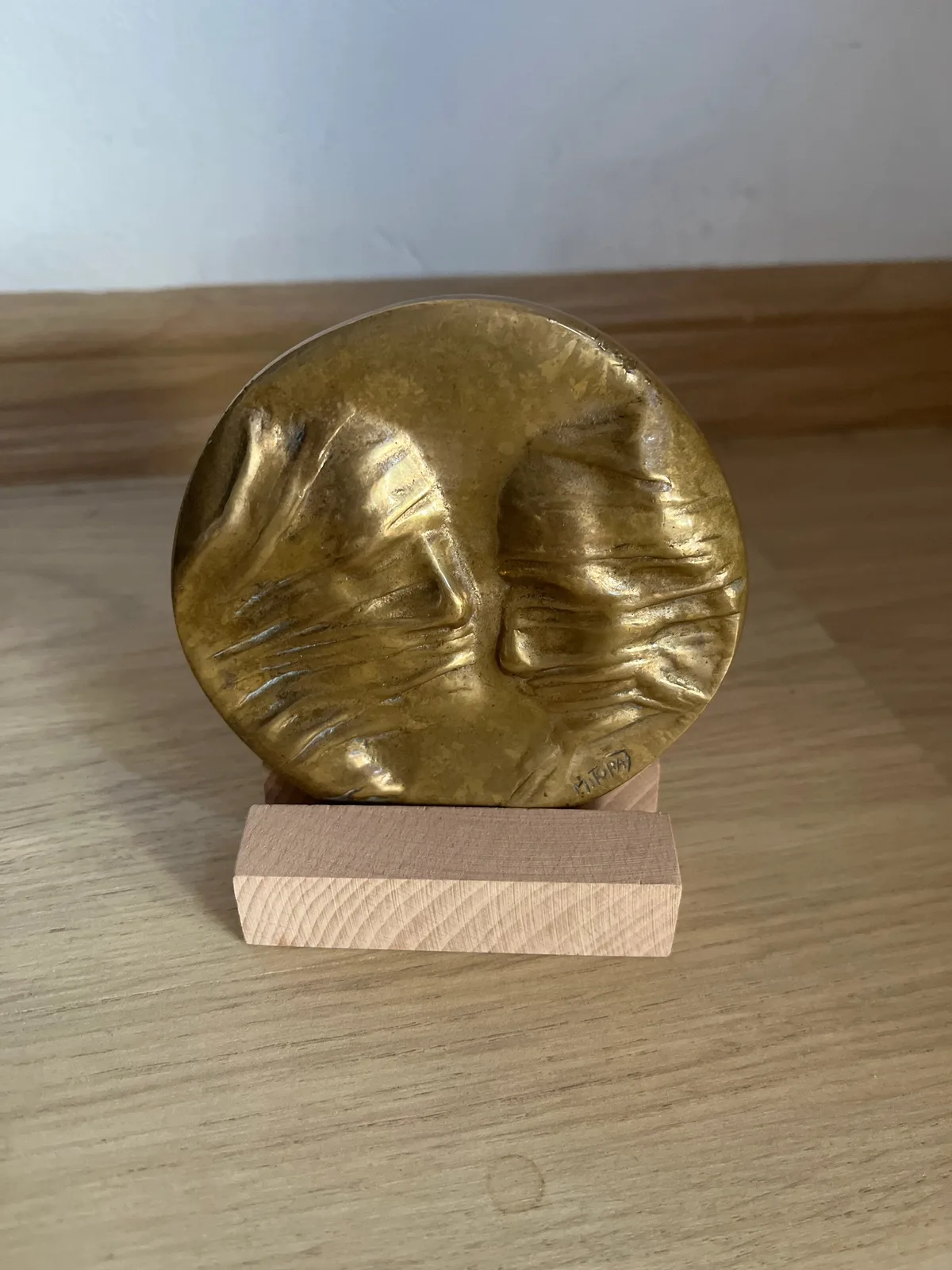
A small circular gold-patinated bronze relief (c. 1980s), signed Mitoraj, set on a wooden base. Two faces emerge in subtle profile — noses and lips barely surfacing through the swathed surface — in a quiet dialogue across the disc. A rare and intimate multiple from a limited edition. ~9 cm diameter
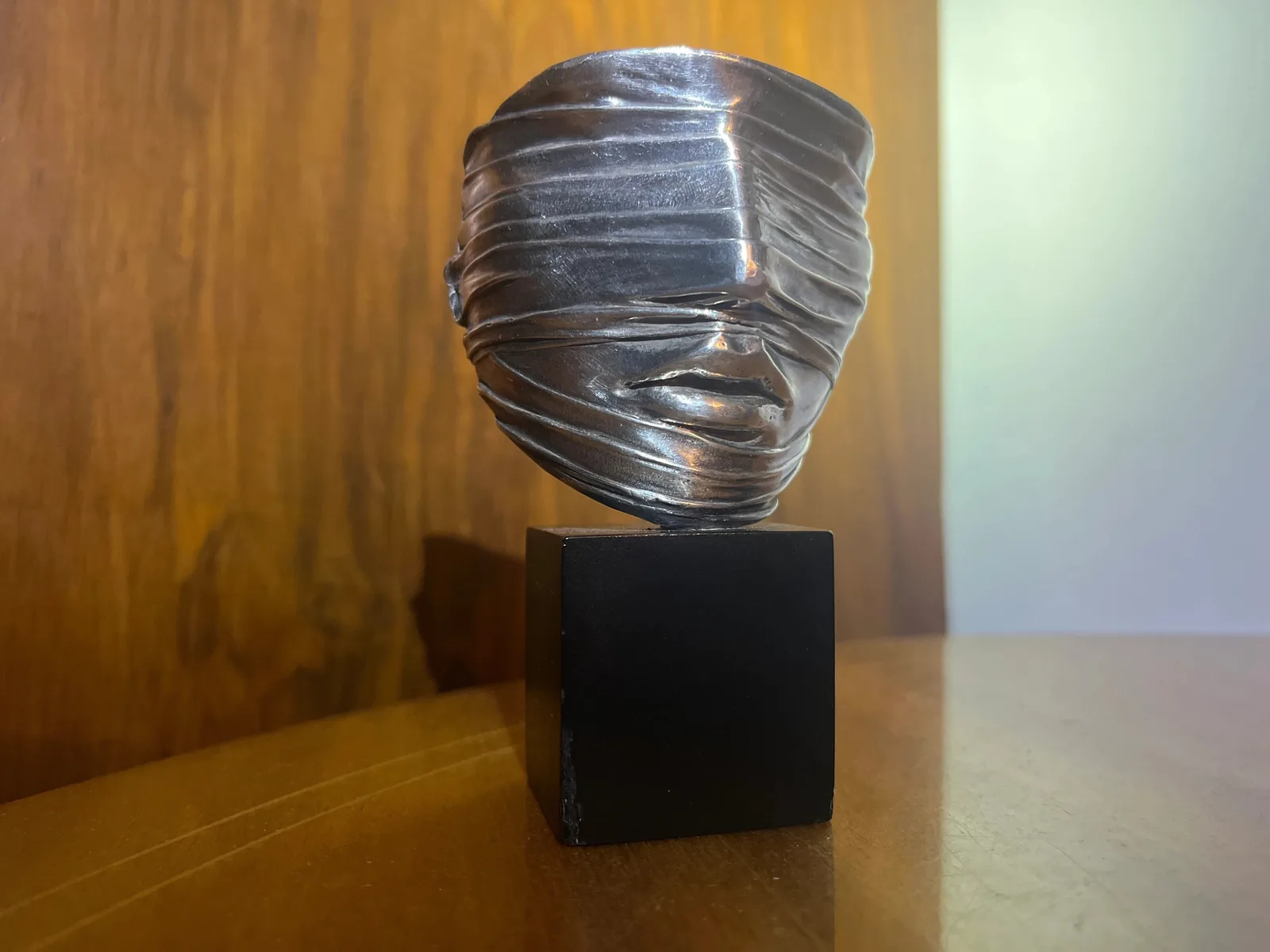
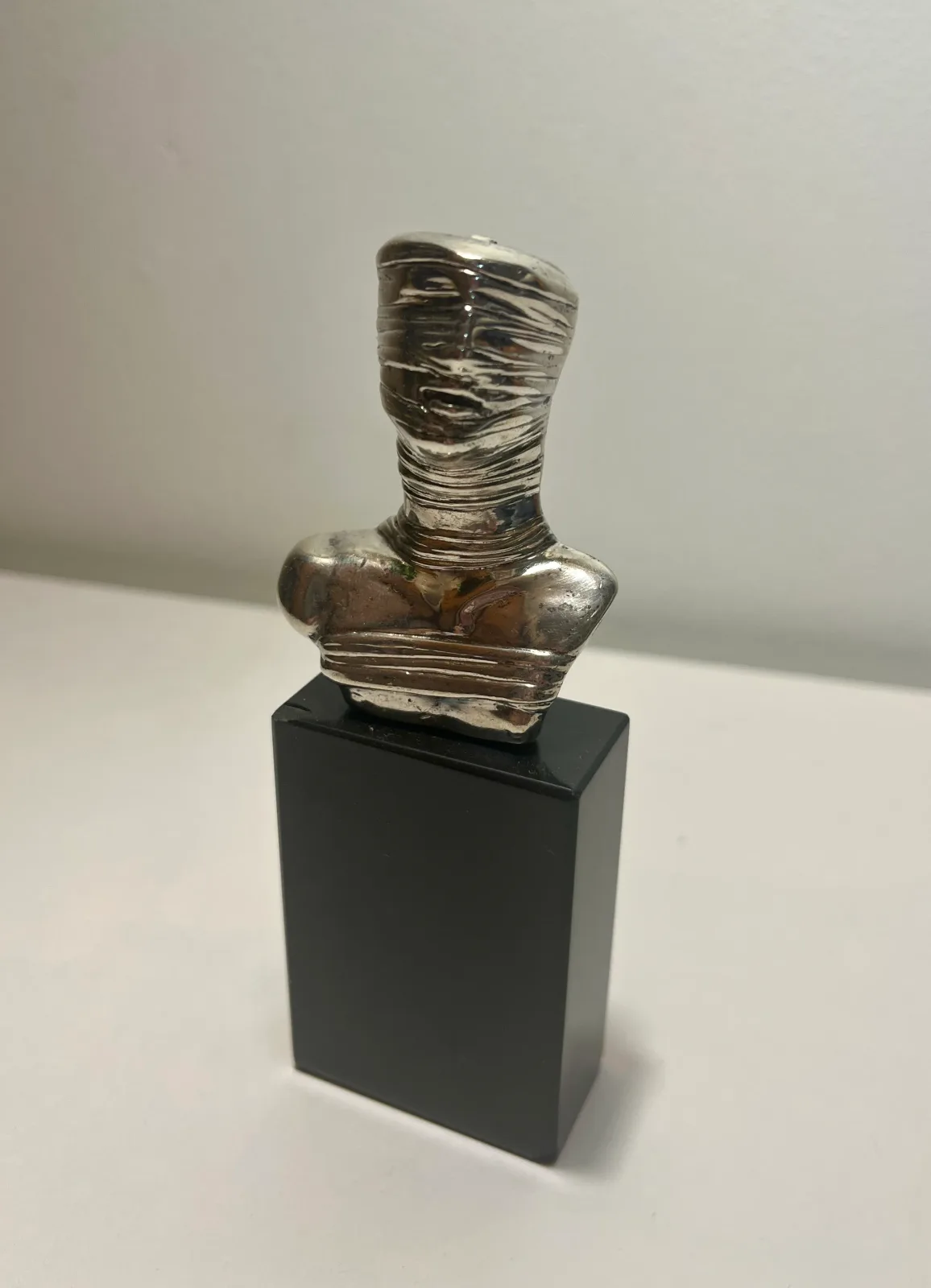
A silver-patinated bronze head entirely enveloped in tightly wound horizontal bands — one of Mitoraj's most powerful recurring motifs. Only the lips break through the wrapping, evoking silence, mystery, and concealed identity. Signed and from a limited edition of 250, published by Artcurial, Paris. On its original black cubic base. 11.5 × 11 × 7 cm (without base) · approx. 20 cm total
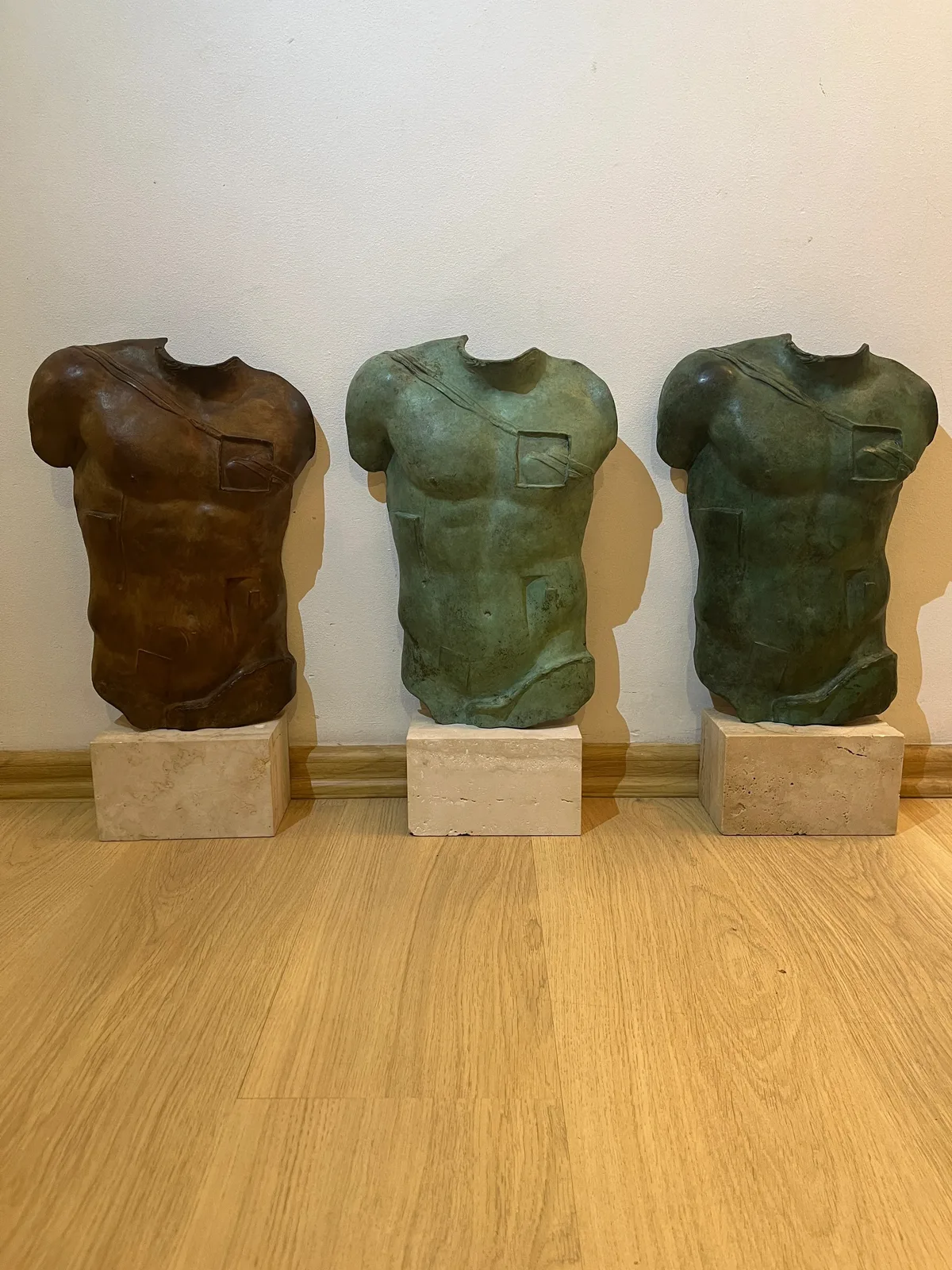
Three Persée bronzes side by side: left in warm brown patina, centre and right in green patina — all from the 1988 edition of 1000 + HC. Each shows the characteristic rectangular chest aperture at the upper left pectoral and sits on a travertine base. 38 cm without base · 48 cm total.
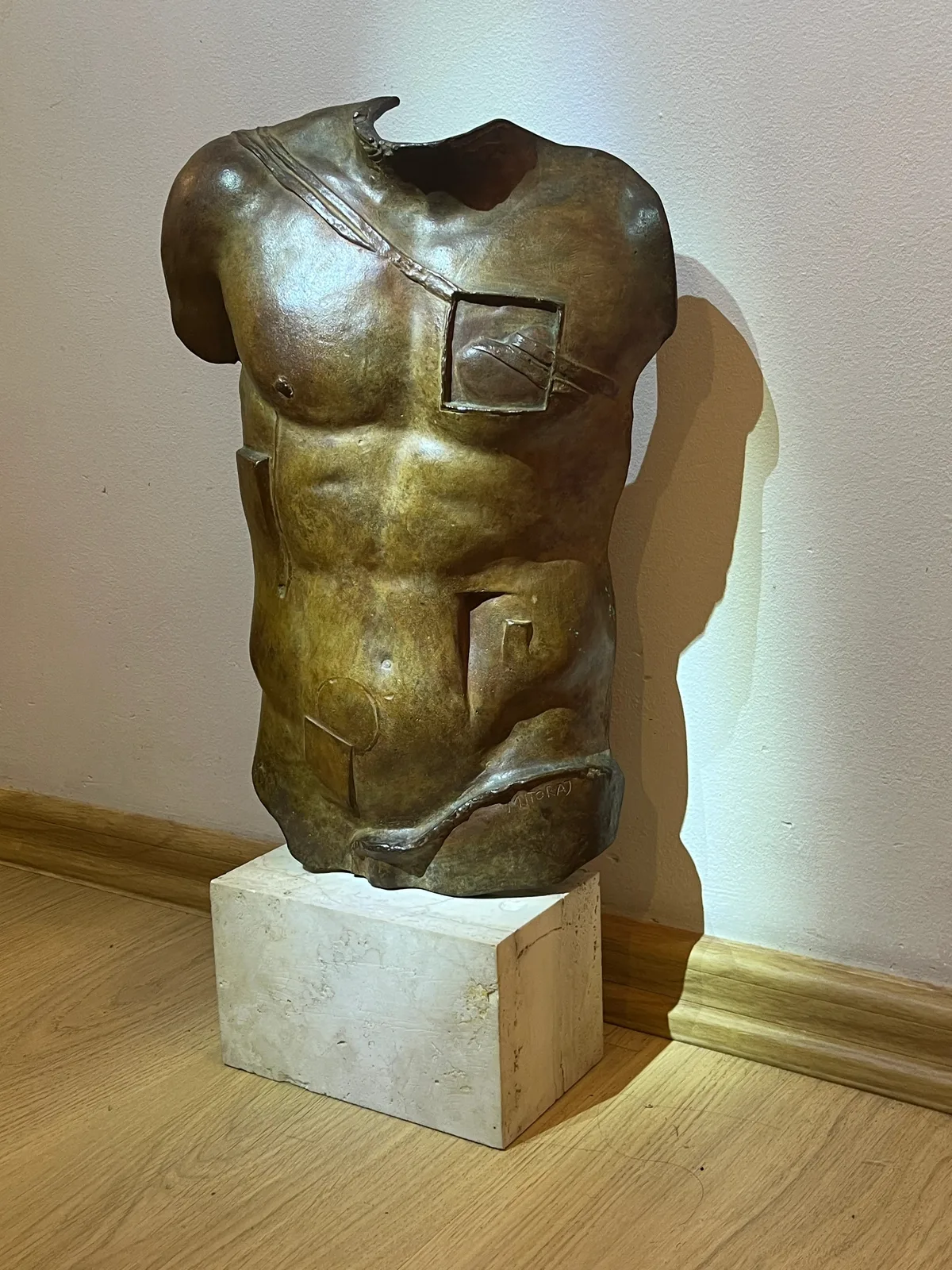
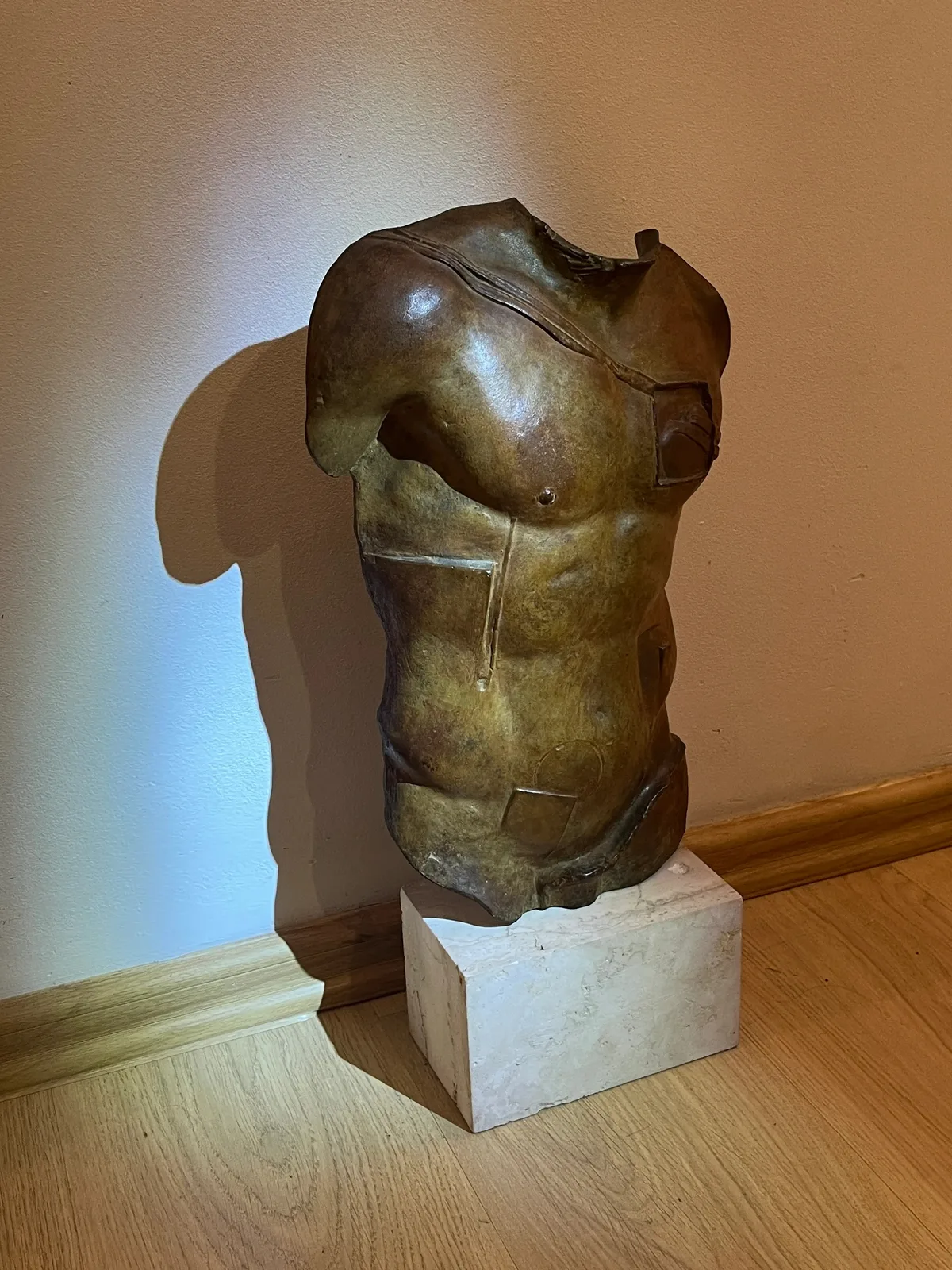
The warm brown-patina Persée from 1988 — upper-left chest aperture confirms the identification. Signed MITORAJ on travertine base, numbered from edition of 1000 + HC. 38 cm without base · 48 cm total.
A small, intensely observed bronze portrait head from 1984 — medal patina, signed at the base, from an edition of 1000. 14.5 × 7 × 5 cm. One of Mitoraj's rare non-mythological subjects. The rectangular aperture in the chest is characteristic of both Persée and Asclépios.
Second Persée bronze, 1988 — showing the sculpture from a different angle, emphasising the depth of the chest void and the quality of the green oxidised patina. Signed MITORAJ. 38 cm without base · 48 cm total.
The warm brown-patina variant of Asclépios 1988 — same edition (1000 + HC) as the standard green. The central chest aperture — symbol of the god of medicine — is clearly visible. Signed MITORAJ, numbered on reverse. 38 × 28 × 14 cm without base · 48 cm total.
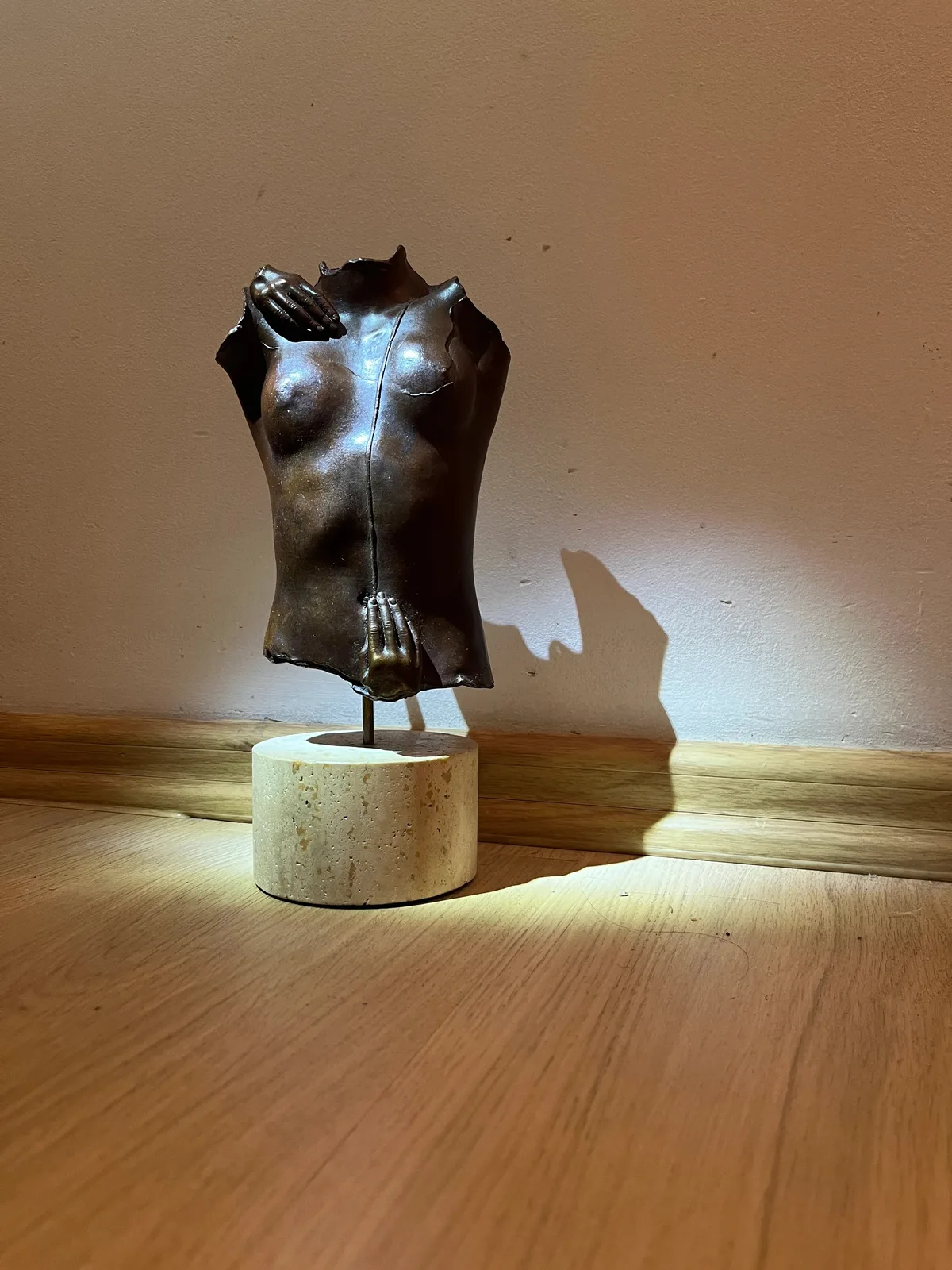
A female torso in dark copper-brown bronze — two delicate hands emerge from the fragmentary body, one cupping the chest, one at the waist, in an intimate gesture of self-embrace. Artcurial edition, 1979. Signed and numbered from an edition of 250, on an original round travertine base. 20 × 14 × 7 cm (sculpture) · 28.5 × 14 × 10 cm overall
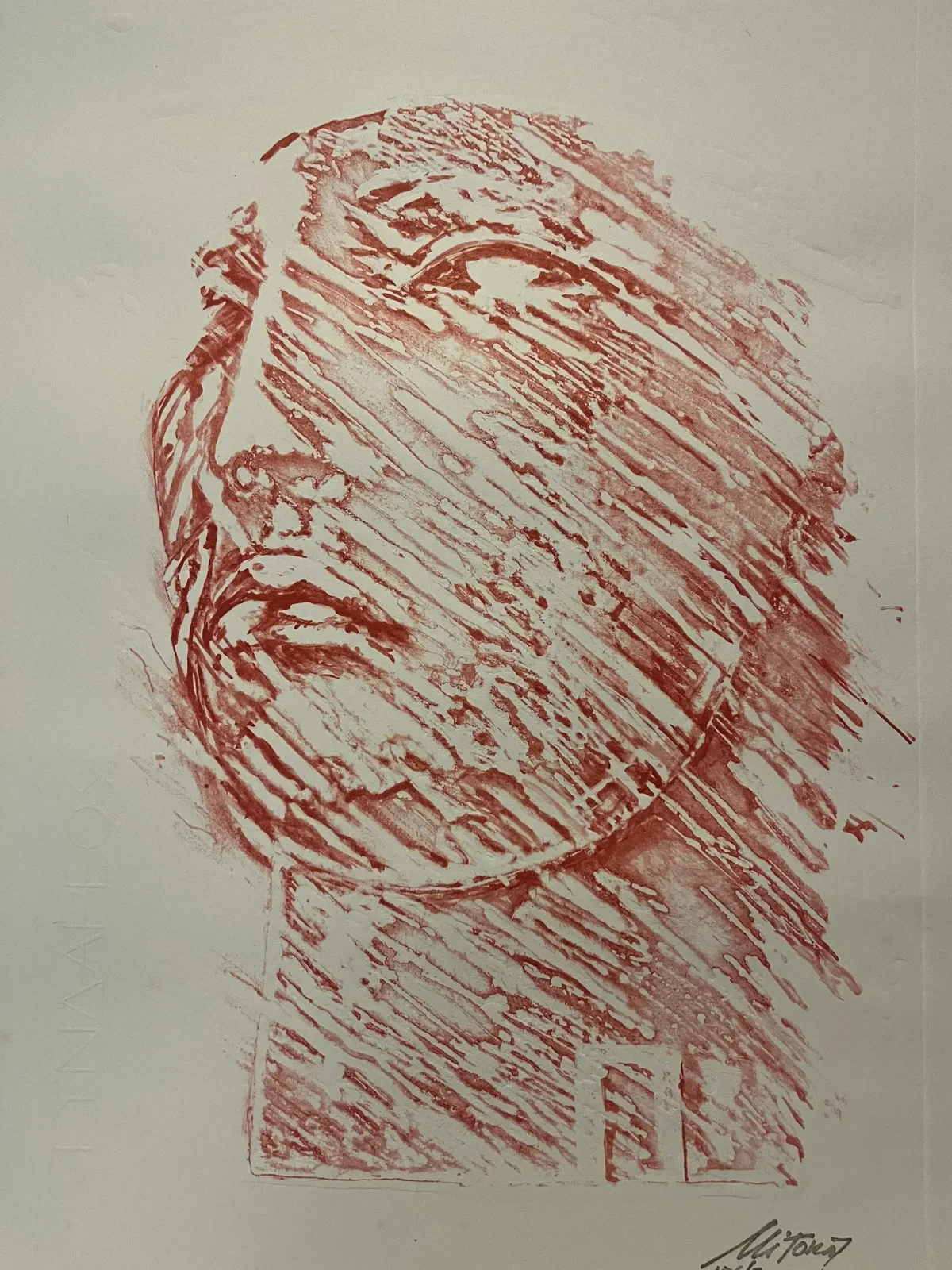
A striking sanguine (red chalk) lithograph depicting Tindareos — the mythological King of Sparta and father of Helen of Troy, rendered as a bandaged and fragmented head in fluid, gestural sanguine strokes on white paper. Signed Mitoraj lower right in pencil. A rare original signed print — Mitoraj's graphic works on paper are considerably scarcer than his bronzes.
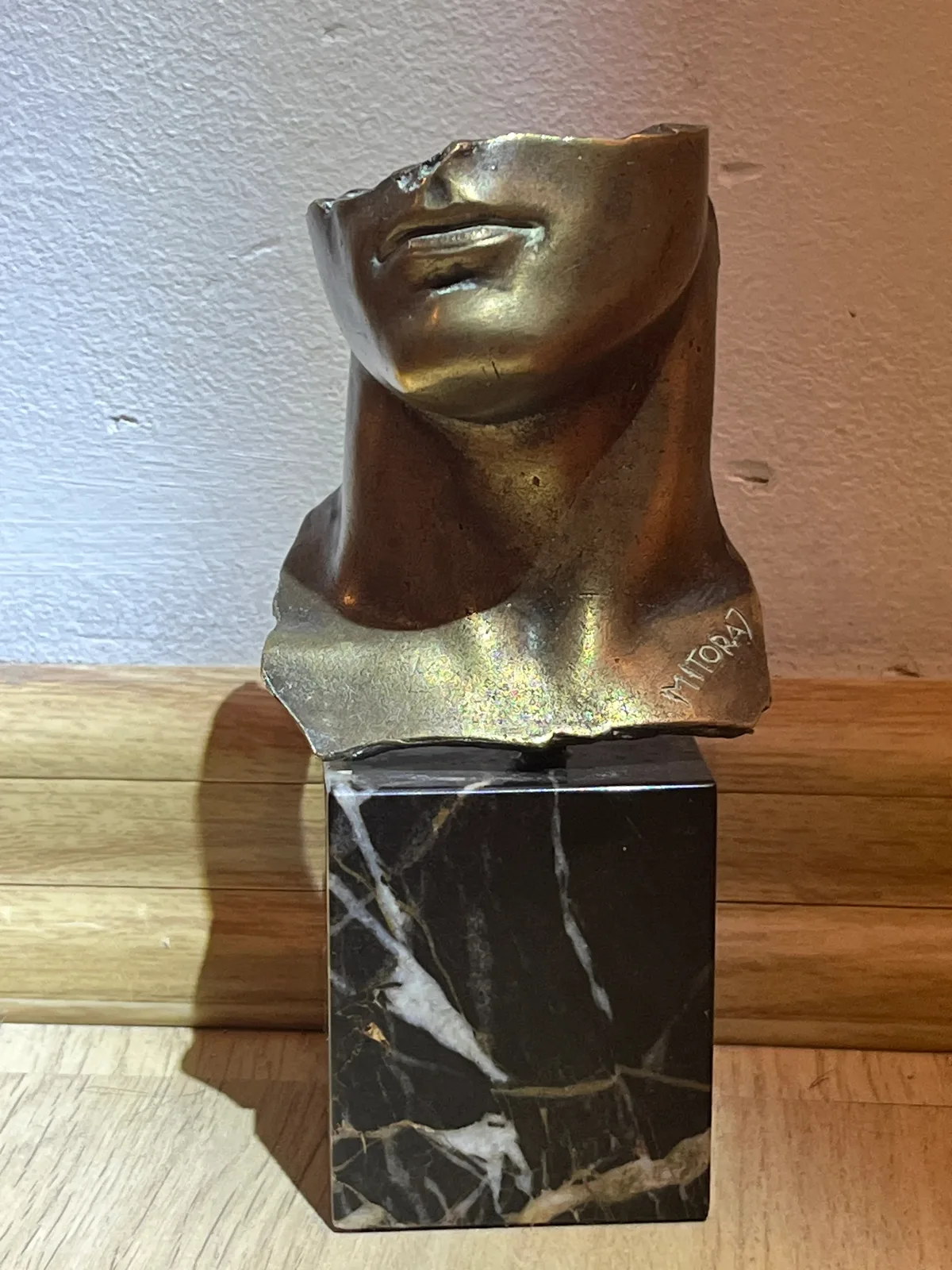
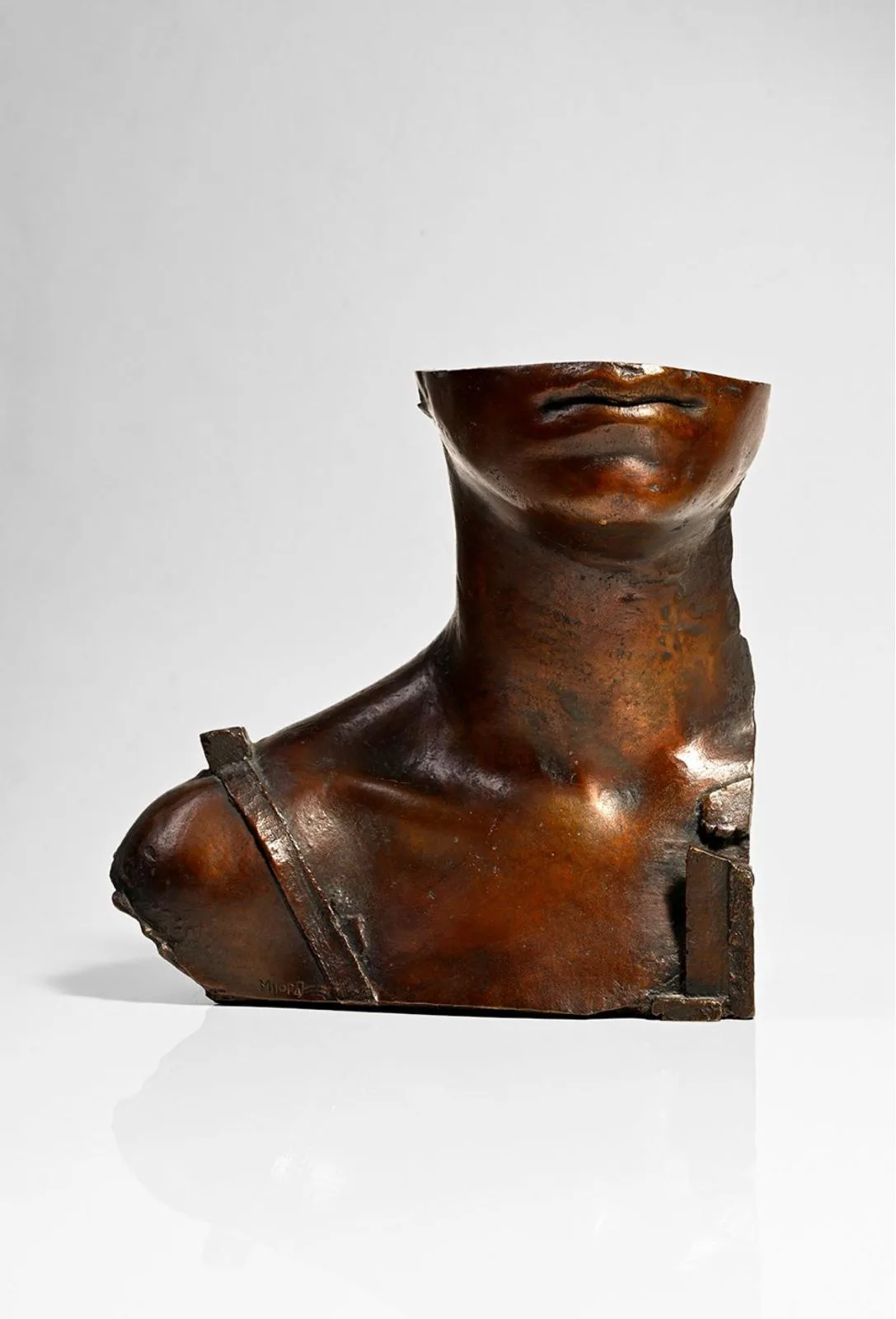
A fragment of a lower face — lips, chin, neck merging into an upper torso — in warm reddish-brown patina. Signed MITORAJ at the lower left edge of the base. A collector bronze meant to be encountered at close range: complete despite its incompleteness.
Research by Series
Auction houses provide price transparency, but they charge sellers 10–18% commission on the hammer price, require 4–12 weeks for consignment processing, and then a further 4–8 weeks for payment after the sale. For a Mitoraj bronze that achieves €25,000 at hammer, a seller paying 15% commission nets around €21,000 — after a wait of four to six months. Selling directly to me means an offer the same day, payment within days, and no commission deducted from the price you receive.
I pay based on current auction market levels. I am not looking for bargains — I am looking for works to add to a serious collection, and I pay accordingly. Every enquiry is treated with complete discretion: your name, your address, and any details of the work you share are never disclosed to any third party.
Several factors determine the market value of any Mitoraj work. Edition size is the most important: an Artcurial edition of 8 (Prométhée) is incomparably rarer than an edition of 1500 (Centurione II). Scale matters enormously — a 40 cm bronze is worth three to four times more than a 20 cm example of the same subject. Condition of the patina is critical; over-cleaned or restored bronzes lose significant value. Provenance — a certificate from Atelier Mitoraj, or an auction record — adds confidence but is rarely decisive for well-documented editions. The original base(travertine, marble, or wood depending on the work) adds to the value of most desktop bronzes.
I consider works in any condition, with or without certificates, with or without original bases. If you are unsure whether what you own is genuine, I will give you an honest assessment — there is no obligation to sell.
The Mitoraj market has strengthened considerably since the record 2025 Warsaw auction in which Tindaro achieved PLN 6.89 million (approximately €1.6 million) — the highest price ever paid for a Mitoraj at Polish auction. This result confirmed the depth of Polish and international collector interest in his work. Early Artcurial editions (Tête Secrète, Kea, Prométhée) are among the most sought-after in the secondary market.
Not sure if you want to sell? That's completely fine — just send a message and a photo if you have one. I reply to everyone personally, and there is absolutely no obligation.
Born in Germany to a Polish mother and a French father, Mitoraj studied at the Academy of Fine Arts in Kraków under Tadeusz Kantor, before establishing his studio in Pietrasanta, Italy — among the same quarries that supplied Michelangelo.
His fragmented figures — bandaged, truncated, serene — drew from classical antiquity while speaking entirely to the modern condition. His works stand in London, Paris, Pompeii, and collections worldwide.
Your identity and any work remain entirely private. No details shared with third parties.
I make straightforward, honest offers. No complicated valuations, no pressure — just a fair and simple conversation.
Once agreed, payment is prompt and direct. No auction cycles, no gallery commissions.
Igor Mitoraj was born in Oederan, Germany in 1944 to a Polish mother and a French father, and grew up in Poland near Kraków. He studied painting under Tadeusz Kantor at the Kraków Academy of Fine Arts, then moved to Paris in 1968 to study at the École Nationale Supérieure des Beaux-Arts. His career as a sculptor was launched by a solo exhibition at Galerie La Hune in Paris in 1976 — the same year he first visited Pietrasanta, the small Tuscan town whose marble quarries and bronze foundries would become the centre of his creative world for the next four decades.
His signature vocabulary — truncated torsos, bandaged heads, fragmented limbs, rectangular apertures through the body — drew from classical Greek and Roman sculpture while speaking entirely to the modern condition. He said: "I feel that a piece of arm or a leg speak far more strongly than a whole body." His public commissions stand in Pompeii, London, Paris, Rome, Milan, Warsaw, Kraków, Bamberg, St. Louis, and across Asia. His work is held by the British Museum, the Hirshhorn, the Los Angeles County Museum of Art, and national museums in Poland and Italy.
Mitoraj died in Paris on 6 October 2014 and was buried in Pietrasanta. Since his death, his market has strengthened considerably — driven by Polish institutional collectors, Italian gallery estates, and a 2025 Warsaw auction record of €1.6 million for his monumental Tindaro. If you own a work by Igor Mitoraj and are considering selling, contact the collector behind this website directly.
Authentic Mitoraj bronzes carry an incised (not cast) signature — MITORAJ in capitals, or igor mitoraj in lowercase for early works — at the base of the neck or lower torso. An edition number in the format n/total appears on the reverse. Foundry marks from Pietrasanta foundries are common. Send me a photograph of the signature, edition number, and overall piece and I will give you an honest assessment free of charge.
Value depends on the work, edition size, scale, condition, and current market. Value depends on the work, edition size, scale, condition, and current market. Early Artcurial editions (Tête Secrète, Kea, Prométhée) are the most sought-after. Send me a photograph and I will give you an honest assessment.
No. Certificates from Atelier Mitoraj in Pietrasanta are valuable but not required — the signature, edition number, and foundry mark are the primary authentication markers. Many genuine works circulate without certificates, particularly those sold through galleries in the 1980s and 1990s. I buy works with and without documentation and will advise on obtaining a certificate if needed.
I respond to every message personally, usually within a few hours and always within 24 hours. There is no automated response system — you will hear from me directly. If you send a photograph, I will include a specific assessment of your work in my reply.
Public sculptures in the Polish capital
Wikimedia Commons, CC BY-SA 3.0 PL
Bronze · Zoliborz, ul. Wybrzeze Gdynskie 4
A monumental bronze Icarus stands before the Olympic Centre — armless, missing one wing. Mitoraj's meditation on human fragility and the myth of hubris.
One of the most sought-after examples of Mitoraj's monumental bronze period.
Wikimedia Commons, CC BY-SA
22 bronzes · Skwer Hoovera
Open-air exhibition of 22 sculptures including casts from the bronze doors of the Basilica of Santa Maria degli Angeli in Rome, installed weeks before the Angel Doors unveiling.
Documentation of this temporary show is rare and valuable to collectors.
✦
No public domain photo available
Bronze · ul. Swietojanska 10, Old Town
Four-metre bronze doors depicting the Annunciation, created for the 400th anniversary of the Sanctuary of Our Lady of Grace. Two wingless angels flank the figure of Mary.
A unique sacred commission, permanently installed in historic Warsaw.
✦
No public domain photo available
Bronze, 5 metres · ul. Bobrowiecka 6, Mokotow
A five-metre male torso cast with Mitoraj's first earned money — his homage to Tuscany. The chest is pierced by a void; inside, a female face gazes outward. Third and final cast; the others stand in Paris and Milan.
Unveiled personally by Mitoraj in 2009. Its private location makes this period especially sought after.
If you hold a work by Mitoraj — contact us.
Private collector · Warsaw, Poland · Seeking works by Igor Mitoraj worldwide
Igor Mitoraj Bronze Sculptures Mitoraj Lithographs & Drawings 🗺 Europe Map | All Cities | London | Rome | Pompeii | Pietrasanta | Paris | Kraków | Mitoraj in Poland & Warsaw Mitoraj Auction Prices
Keywords: Igor Mitoraj sculpture wanted · buy Mitoraj bronze · sell Mitoraj Poland · Mitoraj kolekcjoner Warszawa · Mitoraj Pietrasanta · Mitoraj Asclépios · Mitoraj Tindaro · Mitoraj Eros Bendato · Mitoraj auction · Mitoraj private sale
Mythologies (1990-1995)
Bronze and patina, monumental scale. This iconic series exemplifies Mitoraj's signature fusion of classical mythology with contemporary figuration. The work features fragmented heroic forms—torsos and limbs emerging from or dissolving into abstract geometry, creating a poignant dialogue between permanence and decay. Collectors prize Mythologies pieces for their intellectual depth, investment stability, and museum-quality craftsmanship. These sculptures command premium prices at auction and represent the artist's most sought-after period, particularly in bronze editions of limited casting.
The Mitoraj market strengthened throughout 2025-2026, with bronze sculptures appreciating 8-12% annually. Gallery demand in Warsaw and European capitals remains robust, driven by institutional recognition and private collectors seeking Modernist investment pieces. Secondary market liquidity improved significantly; authenticated works now sell within 60-90 days. Smaller bronzes (under 150cm) and marble pieces show particular strength, appealing to space-conscious collectors while maintaining substantial value appreciation year-over-year.
Portals (1988)
Marble and bronze hybrid, representing Mitoraj's experimental period. This ascending geometric form combines classical stone with contemporary metal elements, creating visual tension between materials. Currently undervalued relative to comparable Mythologies works. Collectors should monitor auction previews; recent comparable sales suggest 15-20% appreciation potential within 18 months.
Mitoraj spent critical formative years in Florence studying Renaissance sculptural techniques before developing his neoclassical-contemporary hybrid aesthetic. This Italian influence profoundly shaped his philosophy, evident in all major works and authentication documentation.